
Science
Science — find the best experiences in Romania. Quick booking, professional guides and kit included.
Difficulty
Beginner – Advanced

Duration
A few days to a few weeks

Location
Laboratories, education centres, museums, campuses or the outdoors

Season
All year, most often in the holidays
Science camps: what are they?
Science camps are teaching programmes where participants find out how the world works through experiments and hands-on activities.
They use the scientific method to explain what happens in nature and in technology.
Participants can run experiments, make observations and take on projects and small pieces of research.
What they are after is curiosity, analytical thinking and an interest in science.
Science camps: the kinds on offer
Physics
Experiments on forces, energy, light and motion.
Chemistry
Experiments on substances, reactions and materials.
Biology
Looking at living things and the systems they belong to.
Astronomy
Watching the sky and finding your way around the universe.
Environmental science
Studying nature, the climate and how to look after them.
Scientific research
Projects built on observation, analysis and experiment.
Science camps: how they work
Introducing the subject
Going over the field and what there is to learn.
Hands-on experiments
Participants test the ideas by doing them.
Observing and making sense of it
Reading the results you get.
A science project
Running an experiment or a project of your own.
Presenting the results
Telling the others what you found and what it means.
Science camps: who are they for?

Curious people
For those who want to understand what goes on around them.

School pupils and teenagers
For building an interest in the STEM subjects.
People who like experimenting
For those who learn best by doing.
Would-be researchers
For those with an eye on a career in science.

People interested in teaching
For those after interactive ways of learning.
Adults keen on science
For those who want to explore new fields hands-on.
Level of the experience
First discoveries
Simple experiments and demonstrations to get you started.
Working in the lab
Harder experiments and applied projects.
Advanced research
Projects built on scientific method and close analysis.
At a glance
The scientific field
Choose between physics, chemistry, biology, astronomy or something else.

The participant's age
The programmes are pitched at what participants can take in.

The kind of experiments
Check what practical activities are included.

Coordinators
The specialists and teachers shape the whole thing.
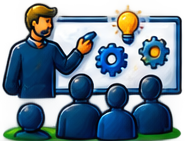
Final projects
Some camps include research or a presentation.
Location
Labs and experiment spaces differ a lot.
Gear

Something to write with
A notebook for observations, results and conclusions.
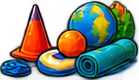
Lab materials
The instruments for the experiments usually come from the organiser.
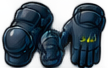
Protective gear
Goggles, gloves or other things for the lab work.

A computer
Handy for analysis, simulations or presentations.

Something to record with
For photographing and recording the experiments.
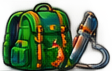
Personal kit
What you need for the time you are there.
Safety
Safety matters most in a science camp during the lab work and the experiments.

Science camps: frequently asked questions
No. There are programmes for beginners.
There are programmes for children, teenagers and adults.
Yes. Most camps include experimental work.
Physics, chemistry, biology, astronomy, ecology and others.
It depends on the programme; lab materials are usually provided.
It can be a first step towards the STEM subjects.
Building curiosity and understanding through hands-on exploring.