




Caves

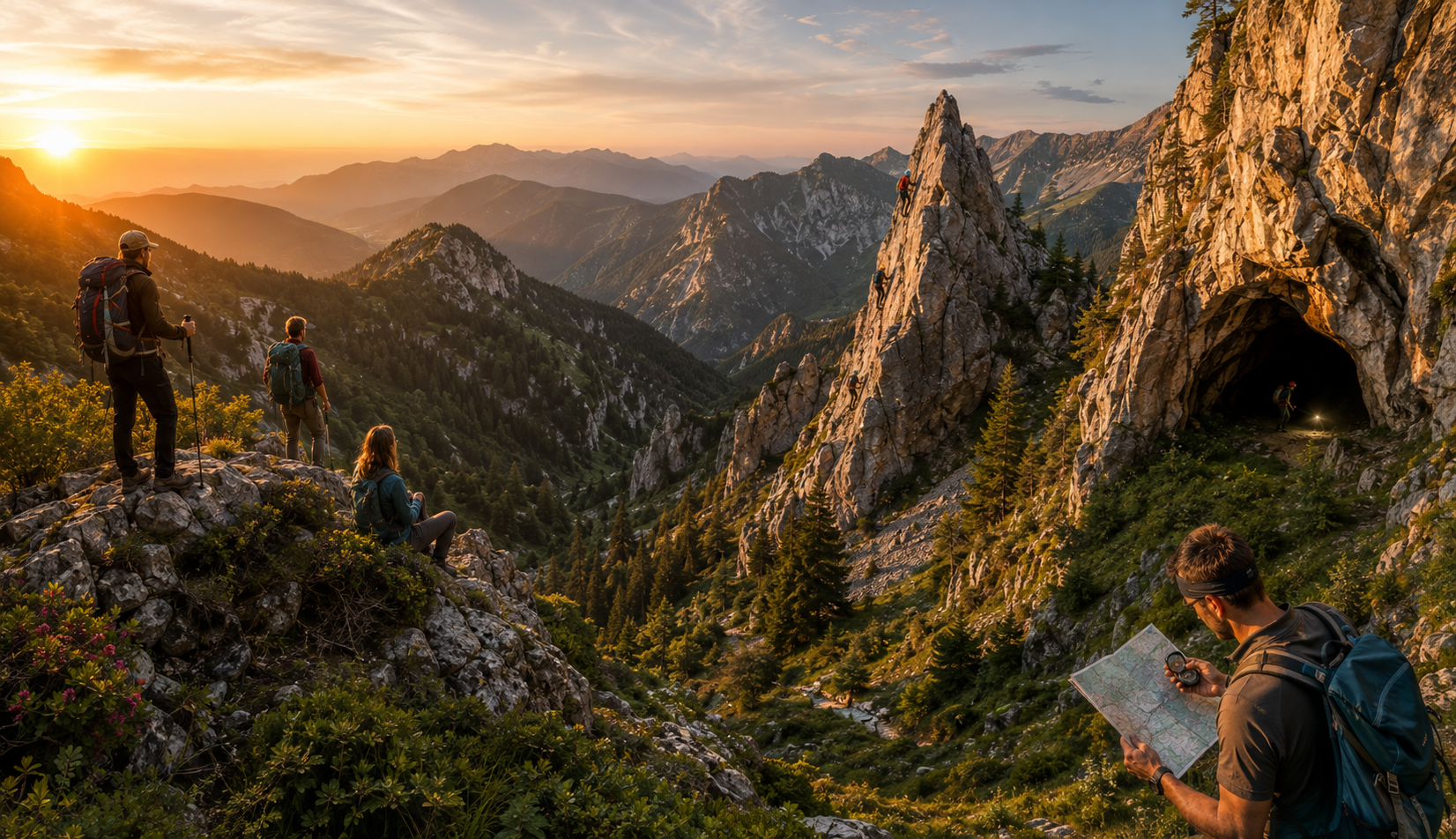
Caves: pick what suits you. Options for beginners, families or groups, in the finest settings there are.

Difficulty

Very easy – Advanced

Duration

30 minutes – a full day

Location

Karst country, mountains, nature reserves

Season

All year round, depending on the cave

What does exploring caves involve?

Exploring caves means discovering the underground world shaped by geology over very long stretches of time.

Caves can hold striking formations — stalactites, stalagmites and long underground galleries.

The activity can be recreational, educational or part of proper speleological work.

Trips range from easy visits to technical exploration.

Outdoor experiences

Caves: experiences available

Book activities run by specialist organisers.

It depends on the type of cave and on how hard the route is.

How does a cave trip work?

01

The opening briefing

You are given the rules and told about the route.

02

Getting the gear ready

The lights and the rest of the kit are checked over.

03

Going in

The group sets off along the underground gallery.

04

Finding the formations

You look at the geological and natural features along the way.

05

Coming out

The trip ends at the agreed point.

There is something here for visitors, families and adventurers alike.

Who are cave trips for?

Visitors

Visitors

They get to see some striking natural sights.

Families

Families

The show caves are within reach of children too.

People who love the outdoors

People who love the outdoors

They can look at habitats found nowhere else.

Adventurers

Adventurers

They can take on the more involved trips.

Caves offer everything from easy tourist visits to involved speleological work.

Experience level for cave trips

Visiting a show cave

Discovery

Accessible routes with lighting and facilities for visitors.

Learning Relaxing

Guided exploring

Adventure

Guided trips through natural galleries and less accessible parts.

Learning Exploring

Recreational caving

Navigation

Trips that mean working your way through natural galleries and varied ground.

Stamina Technique

Technical caving

Planning

Involved trips that call for specialist preparation.

Specialist kit Experience
Things worth knowing before going into a cave.

At a glance

A steady temperature

Many caves stay cold all year round.

Your own light

You need a light source that is up to the job.

A guide is worth having

For caves you do not know, going with a guide is the sensible choice.

Varied ground

The floor can be wet, slippery or broken.

Looking after the environment

The formations underground need protecting.

Booking

Some organised trips have to be booked ahead.

What you need depends on how hard the route is.

Kit for cave trips

Safety helmet

Protects your head where the roof is low or rock can fall.

Head torch

Lights the way and leaves your hands free.

Suitable clothing

Your clothes need to keep out the damp and the cold.

Walking boots

They grip on awkward surfaces.

Gloves

They protect your hands where there is bare rock.

Rucksack

For carrying your kit and supplies.

Safety on cave trips

The world underground calls for care and for proper preparation.

Following the guide's directions
The right kit
Checking the conditions
Moving as a group
Looking after the cave
Answers for anyone curious about the world underground.

Caves — frequently asked questions

Can I visit a cave with no experience?
+

Yes. The show caves work well for beginners.

Are they suitable for children?
+

Yes, if the route matches their age and the difficulty is right.

Is it cold in caves?
+

Many caves are colder than it is outside.

Is it suitable if I am claustrophobic?
+

That varies from person to person, and with the cave you pick.

Can I take photographs?
+

Yes, in many caves it is allowed if you follow the local rules.

What is caving?
+

It is the scientific study and exploration of caves.

Why do caves need protecting?
+

The world underground is fragile and takes an extremely long time to form.